Hip Hop
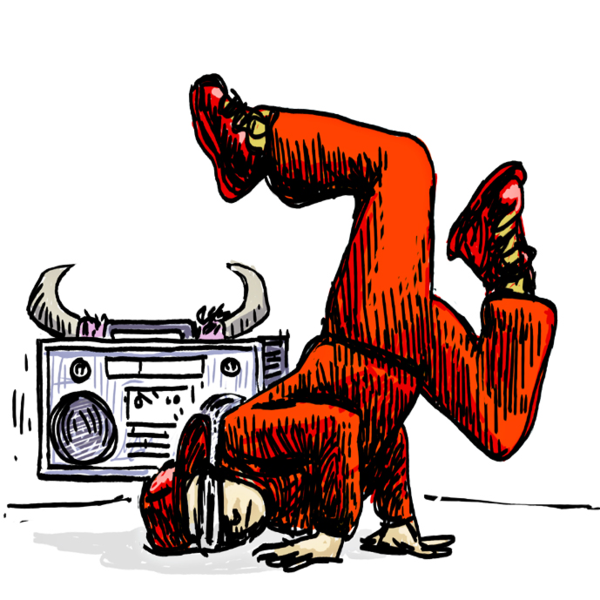
Hip hop is a broad conglomerate of artistic forms that originated within a marginalized subculture in the South Bronx and Harlem in New York City among black and Latino youth during the 1970s.[1][2][3][4][5][6] It is characterized by four distinct elements, all of which represent the different manifestations of the culture: rap music(oral), turntablism or "DJing" (aural), breaking (physical) and graffiti art (visual). Despite their contrasting methods of execution, they find unity in their common association to the poverty and violence underlying the historical context that birthed the culture. It was as a means of providing a reactionary outlet from such urbanhardship that "hip hop" initially functioned, a form of self-expression that could reflect upon, proclaim an alternative to, try to challenge or merely evoke the mood of the circumstances of such an environment. Even while it continues in contemporary history to develop globally in a flourishing myriad of diverse styles, these foundational elements provide stability and coherence to the culture.[1] The term is frequently used mistakenly to refer in a confining fashion to the mere practice of rap music.
The origin of the culture stems from the block parties of the Ghetto Brothers when they plugged the amps for their instruments and speakers into the lampposts on 163rd Street and Prospect Avenue, and from DJ Kool Herc at 1520 Sedgwick Avenue, where Herc mixed samples of existing records with his own shouts to the crowd and dancers. Kool Herc is credited as the "father" of hip hop. DJ Afrika Bambaataa of the hip hop collective Zulu Nation outlined the pillars of hip hop culture, to which he coined the terms: MCing or "Emceein", DJing or "Deejayin", B-boying and graffiti writing or "Aerosol Writin".[7][8][9][10][11]
Since its evolution throughout the South Bronx, hip hop culture has spread to both urban and suburban communities throughout the world.[12] Hip hop music first emerged with Kool Herc and contemporary disc jockeys and imitators creating rhythmic beats by looping breaks (small portions of songs emphasizing a percussive pattern) on two turntables. This was later accompanied by "rap", a rhythmic style of chanting or poetry often presented in 16-bar measures or time frames, and beatboxing, a vocal technique mainly used to provide percussive elements of music and various technical effects of hip hop DJs. An original form of dancing and particular styles of dress arose among fans of this new music. These elements experienced considerable adaptation and development over the course of the history of the culture.
Wiz Khalifa

Cameron Jibril Thomaz (born September 8, 1987), better known by the stage name Wiz Khalifa, is an American rapper and singer-songwriter. He released his debut album, Show and Prove, in 2006, and signed to Warner Bros. Records in 2007. His Eurodance-influenced single, "Say Yeah", received urban radio airplay, charting on the Rhythmic Top 40 and Hot Rap Tracks charts in 2008
Khalifa parted with Warner Bros. and released his second album, Deal or No Deal, in November 2009. He released the mixtape Kush and Orange Juice as a free download in April 2010; he then signed with Atlantic Records. He is also well known for his debut single for Atlantic, "Black and Yellow", which peaked at number one on the Billboard Hot 100. His debut album for the label, Rolling Papers, was released on March 29, 2011.] He followed that album with O.N.I.F.C. on December 4, 2012 which was backed by the singles "Work Hard, Play Hard" and "Remember You".
Khalifa was born in Minot, North Dakota on September 8, 1987 to a mother and a father serving in the military.[1][4] His parents divorced when Khalifa was about three years old. His parents' military service caused him to move regularly. Khalifa lived in Germany, the United Kingdom, and Japan before settling in Pittsburghwhere he attended Taylor Allderdice High School
His stage name is derived from Khalifa, an Arabic word meaning "successor", and wisdom, which was shortened to Wiz when Khalifa was a young boy. Khalifa stated to spinner.com that the name also came from being called "young Wiz 'cause I was good at everything I did, and my granddad is Muslim, so he gave me that name; he felt like that's what I was doing with my music." He got a tattoo of his stage name on his 17th birthday. He cites Jimi Hendrix, Camp Lo, The Notorious B.I.G. and Bone Thugs-n-Harmony as musical influences.
Lil Wayne

Dwayne Michael Carter, Jr. (born September 27, 1982), known by his stage name Lil Wayne, is an American rapper from New Orleans, Louisiana. In 1991, at the age of nine, Lil Wayne joined Cash Money Records as the youngest member of the label, and half of the duo The B.G.'z, alongside fellow New Orleans-basedrapper Lil' Doogie. In 1996, Lil Wayne formed the Southern hip hop group Hot Boys, with his Cash Money label-mates Juvenile, Young Turk and Lil' Doogie (who now went by B.G.). Hot Boys debuted with Get It How U Live! that same year. Lil Wayne gained most of his success with the group's major selling album Guerrilla Warfare (1999). Along with being the flagship artist of Cash Money Records, Lil Wayne is also the chief executive officer (CEO) of his own imprint, Young Money Entertainment, which he founded in 2005.
Lil Wayne's debut studio album Tha Block Is Hot (1999), was certified platinum by the Recording Industry Association of America (RIAA). His following albums,Lights Out (2000) and 500 Degreez (2002), were certified gold. He reached higher popularity with Tha Carter (2004), which was led by the single "Go D.J.", also appearing on Destiny's Child's top ten single "Soldier", that same year. The album was followed by Tha Carter II (2005) and several mixtapes and collaborations throughout 2006 and 2007. Tha Carter III (2008) became Lil Wayne's most successful album to date, with first-week sales of over 1 million copies in the United States. It included the number-one single "Lollipop", as well as "A Milli" and "Got Money", and won the Grammy Award for Best Rap Album.
Reggae
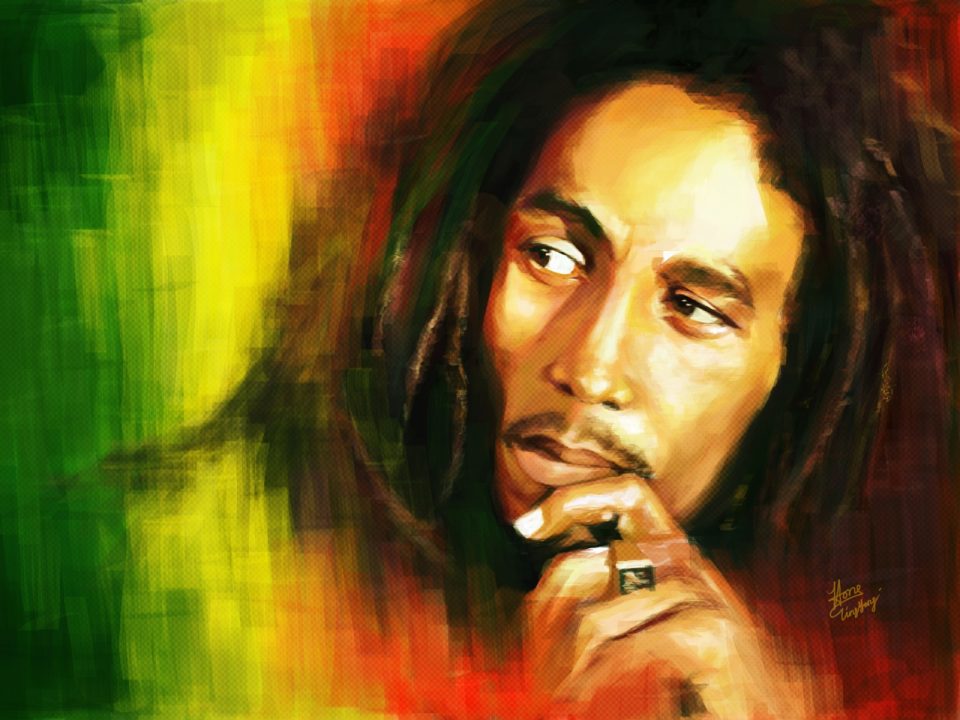
Reggae developed from Ska and rocksteady in the 1960s. The shift from rocksteady to reggae was illustrated by the organ shuffle pioneered by Jamaican musicians like Jackie Mittoo and Winston Wright and featured in transitional singles "Say What You're Saying" (1967) by Clancy Eccles and "People Funny Boy" (1968) by Lee "Scratch" Perry. The Pioneers' 1968 track "Long Shot (Bus' Me Bet)" has been identified as the earliest recorded example of the new rhythm sound that became known as reggae.[6]
Early 1968 was when the first bona fide reggae records were released: "Nanny Goat" by Larry Marshall and "No More Heartaches" by The Beltones. That same year, the newest Jamaican sound began to spawn big-name imitators in other countries. American artist Johnny Nash's 1968 hit "Hold Me Tight" has been credited with first putting reggae in the American listener charts.[7] Around the same time, reggae influences were starting to surface in rock and pop music, one example being 1968's "Ob-La-Di, Ob-La-Da" by The Beatles.[8]
However, another pioneer was Millie Small (born 6 October 1946),[9] a Jamaican singer-songwriter, best known for her 1964 blue-beat/ska cover version of "My Boy Lollipop" which was a smash hit internationally.The Wailers, a band started by Bob Marley, Peter Tosh and Bunny Wailer in 1963, is perhaps the most recognized band that made the transition through all three stages of early Jamaican popular music: ska, rocksteady and reggae. Other significant reggae pioneers include Prince Buster, Desmond Dekker and Ken Boothe.
Notable Jamaican producers influential in the development of ska into rocksteady and reggae include: Coxsone Dodd, Lee "Scratch" Perry, Leslie Kong, Duke Reid, Joe Gibbs and King Tubby. Chris Blackwell, who founded Island Records in Jamaica in 1960, relocated to England in 1962, where he continued to promote Jamaican music. He formed a partnership with Lee Gopthal's Trojan Records in 1968, which released reggae in the UK until bought by Saga records in 1974.
Reggae influence bubbled to the top of the U.S. Billboard Hot 100 charts in late 1972. First Three Dog Night hit #1 in September with a cover of the Maytones' version of "Black and White". Then Johnny Nash was at #1 for four weeks in November with "I Can See Clearly Now".
In 1973, the film The Harder They Come starring Jimmy Cliff was released and introduced Jamaican music to cinema audiences outside of Jamaica. Though the film achieved cult status its limited appeal meant that it had a smaller impact than Eric Clapton's 1974 cover of Bob Marley's "I Shot the Sheriff" which made it onto the playlists of mainstream rock and pop radio stations worldwide. Clapton's "I Shot The Sheriff" used modern rock production and recording techniques and faithfully retained most of the original reggae elements; it was a breakthrough pastiche devoid of any parody and played an important part in bringing the music of Bob Marley to a wider rock audience.[2] By the mid-1970s, authentic reggae dub plates and specials were getting some exposure in the UK on John Peel's radio show, who promoted the genre for the rest of his career. Around the same time, British filmmaker Jeremy Marre documented the Jamaican music scene in Roots Rock Reggae, capturing the heyday of roots reggae.
In the late 1970s and early 1980s, the UK punk rock scene flourished, and reggae was a notable influence. The DJ Don Letts would play reggae and punk tracks at clubs such as The Roxy. Punk bands such as The Clash, The Ruts, The Members and The Slits played many reggae-influenced songs. Around the same time, reggae music took a new path in the UK; one that was created by the multiracial makeup of England's inner cities and exemplified by groups like Steel Pulse,Aswad and UB40, as well as artists such as Smiley Culture and Carroll Thompson. The Jamaican ghetto themes in the lyrics were replaced with UK inner city themes, and Jamaican patois became intermingled with Cockney slang. In South London around this time, a new subgenre of Lovers Rock, was being created. Unlike the Jamaican music of the same name which was mainly dominated by male artists such as Gregory Isaacs, the South London genre was led by female singers like Thompson and Janet Kay. The UK Lovers Rock had a softer and more commercial sound.
Other reggae artists who enjoyed international appeal in the early 1980s include Third World, Black Uhuru and Sugar Minott. The Grammy Awards introduced the Grammy Award for Best Reggae Albumcategory in 1985.
Bob Marley

Robert Nesta Marley Booker OM (6 February 1945 – 11 May 1981) was a Jamaican singer-songwriter who achieved international fame through a series of crossoverreggae albums Starting out in 1963 with the group the Wailers, he forged a distinctive songwriting and vocal style that would later resonate with audiences worldwide. The Wailers would go on to release some of the earliest reggae records with producer Lee Scratch Perry. After the Wailers disbanded in 1974,[4]Marley pursued a solo career which culminated in the release of the album Exodus in 1977 which established his worldwide reputation He was a committedRastafarian who infused his music with a profound sense of spiritualityRobert Nesta Marley was born on the farm of his maternal grandfather in Nine Mile, Saint Ann Parish, Jamaica, to Norval Sinclair Marley and Cedella Booker.[7]Norval Marley was a European-Jamaican of British heritage (Heather Marley once stated that he may have had distant Jewish Syrian ancestry) Norval claimed to have been a captain in the Royal Marines, though at the time of his marriage to Cedella Booker, an African-Jamaican then 18 years old, he was employed as a plantation overseer. Though Bob Marley was named Nesta Robert Marley, a Jamaican passport official would later reverse his first and middle names.Norval provided financial support for his wife and child but seldom saw them as he was often away. Bob Marley attended Stepney Primary and Junior High School which serves the catchment area of Saint Ann.] In 1955, when Bob Marley was 10 years old, his father died of a heart attack at the age of 70.
Marley and Neville Livingston (later known as Bunny Wailer) had been childhood friends in Nine Mile. They had started to play music together while at Stepney Primary and Junior High School.] Marley left Nine Mile with his mother when he was 12 and moved to Trenchtown, Kingston. Cedella Booker and Thadeus Livingston (Bunny Wailer's father) had a daughter together whom they named Pearl, who was a younger sister to both Bob and Bunny. Now that Marley and Livingston were living together in the same house in Trenchtown, their musical explorations deepened to include the latest R&B from American radio stations whose broadcasts reached Jamaica, and the new Ska music.[ The move to Trenchtown was proving to be fortuitous, and Marley soon found himself in a vocal group with Bunny Livingston, Peter Tosh, Beverley Kelso and Junior Braithwaite. Joe Higgs, who was part of the successful vocal act Higgs & Wilson, resided on 3rd St., and his singing partner Roy Wilson had been raised by the grandmother of Junior Braithwaite. Higgs and Wilson would rehearse at the back of the houses between 2nd and 3rd Streets, and it wasn't long before Marley (now residing on 2nd St), Junior Braithwaite and the others were congregating around this successful duo.] Marley and the others didn't play any instruments at this time, and were more interested in being a vocal harmony group. Higgs was glad to help them develop their vocal harmonies, although more importantly, he had started to teach Marley how to play guitar — thereby creating the bedrock that would later allow Marley to construct some of the biggest-selling reggae songs in the history of the genre
This is a song of the band Mensajeros Reggae: Si vas a dejarme...
hope you like (:
Quique Neira

Quique Neira (Chile) the charismatic Icon of Latin Reggae has risen to legendary status in Latin America’s Reggae circles since the 1990’s –His mellow mix of Roots Rock Reggae and Latin rhythms has drawn hundreds of thousands enthusiastic audience to clubs and large Festivals in Latin America, now as well in EuropeQuique Neira has a unique voice and is a great live musician, composer and producer.In the 1990s he became a permanent fixture on the Latin American Reggae scene as a frontman and composer for Gondwana and Bamboo. 2002 he started his successful solo career. He is considered to be one of the most famous and talented musicians from Latin America, honoured with the National Arts Award PREMIO ALTAZOR for best composition in Chile 2006 for album COSAS BUENAS andin 2012 for his recently released album ALMA .
With his solo albums (“Eleven“/2003, “Cosas Buenas” /2005, “Jah Rock “/ 2008 as well releasd 2010 as a European Edition/Label GLM Munich Germany) and ALMA ( 2011) he always gets the charts in his homeland. –
With his solo albums (“Eleven“/2003, “Cosas Buenas” /2005, “Jah Rock “/ 2008 as well releasd 2010 as a European Edition/Label GLM Munich Germany) and ALMA ( 2011) he always gets the charts in his homeland. –

The “National Rastaman“ has been equally popular at big Latin American festivals – including the One Spring Festival /Chile 2007 (along with the Wailers),and in 2009 , the Festival de Reggae Latino /Puerto Rico, 2008, 2009 and 2010, the Cumbre del Rock Chileno II /Chile, 2009 – Festival Carlos Paz and Love / Argentina 2010,the Vibraciones de América /México, 2008, 2009. 2012 , Tour USA 2012 ….


Nice post Dominick y like hip hop
ResponderEliminarVery goooood! I like this blog����
ResponderEliminarNice blog, and great content :)
ResponderEliminarAmazing blog men
ResponderEliminarYour Blog is about music.
ResponderEliminarYou create a blog header related with music
You personalize your blog with: images, music and videos
Your posts are written in English
You have at least 3 comments in your blog from your classmates.
10